Mostrando entradas con la etiqueta Literacy. Mostrar todas las entradas

martes, 28 de enero de 2014

The Buddha of Suburbia

The Buddha of Suburbia (1990), written by Hanif Kureishi, won the Whitbread Award for the best first novel. It has been translated into 20 languages and was also made into a four-partdrama series by the BBC in 1993, with a soundtrack by David Bowie.


The Buddha of Suburbia is said to be very autobiographical. It is about Karim, a mixed-race teenager, who is desperate to escape suburban South London and make new experiences in London in the 1970s. Gladly, he takes the unlikely opportunity when a life in the theatre announces itself. When there is nothing left for him to do in London, he stays in New York for ten months. Returning to London, he takes on a part in a TV soap opera and the book leaves its reader on the verge of Thatcherism.
The suburbs are "a leaving place" from which Kureishi's characters must move away. To Karim, London—even though it is geographically not far away from his home—seems like a completely different world. Therefore his expectations of the city are great.
Click here to view a file with evidences on different topics of the book


lunes, 27 de enero de 2014

Primary literacy in Finland


WHY PRIMARY TEACHERS FROM FINLAND DEAL SO SUCCESSFULLY WITH LITERACY IN THE PRIMARY YEARS? SOME IDEAS

In that Country there is the idea of children learns by doing. We can see a class where the children are working separately and the teacher helps them in some specifics moments.
In early ages they don’t learn at the same speed at others. For example, in the video, we can see that there are lots of different levels in the same class. Some of them are written a whole book with 6 pages and now they are doings their covers, and others are still working in their stories. Some of them have papers books with corrections and they are writing them in the computers to print them after, and other ones are writing directly in the computers.
In the curriculum the reading and learning skill are reflected in different kinds of text. They were seeing poems, information texts, stories and jokes. Also, the actual activity is focus on creativity and the aim that they can express themselves (not important only for writing but also for oral expression)
Different spaces at the same time. The have freedom to move into the class to the library upstairs. There isn’t a unique class with only a teacher, and a unique task.
Telling stories: all the children do their own hand puppets to work with drama for write the stories after. Furthermore, telling stories is a routine in the everyday school.
The organization of the day class: They start by making a circle, a good way to introduce the children to the school day with some sounds and rhythms to make they calm. They manage the idea that all the children want to say something talking in a small groups. With this idea the teacher encourage the time to communicate. This activity finish with some fed-back for the whole class (one child of each group say what were they talking about).
For the activity of making books they started by doing a magazine where everybody could include stories of their own. Now they can put all their own stories into one book. They had have the change of develop imagination
When the children finish the principal project they can move it for other story. In the library they can play games about reading and writings skills (opposites, read newspapers…)
Key factors: resources, personality education, and less people with lower abilities. Also, the society in that country appreciates education a lot. They are focus in learn other languages at very early stages. For that you have to know very well your own language to learn another one. They give the story-telling and playing a lot of importance in child’s growth.

Nursery Rhymes

Nursery Rhymes

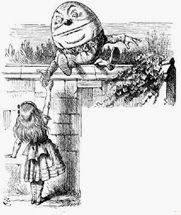
Humpty Dumpty


Humpty Dumpty sat on a wall,
Humpty Dumpty had a great fall;
All the king's horses and all the king's men
Couldn't put Humpty together again.


Hickory dickory dock!
The mouse ran up the clock;
The clock struck one,
The mouse ran down,
Hickory, Dickory, Dock!


Little Miss Muffet
Little Miss Muffet, Sat on a tuffet,
Eating her curds and whey;
Along came a spider,
Who sat down beside her,
And frightened Miss Muffet away.


Round and round the garden
Round and round the garden,
Like a teddy bear;
One step, two step,

                             Tickle you under there!

Reading Film: The Monk and the Fish


DEVELOPING LITERACY SKILLS IN THE PRIMARY CLASS. SAMPLE LESSON

START BY LISTENING
They start the class with a listening activity before see the film. She asked questions to make predictions on what the story is about only listening to the music. What the sounds can mean, if the music remind them a particular part of the day, and clues in the film soundtrack about the setting and the period. Is remarkable how much children can learn about the film with the soundtrack, without see any music.
Music definitely supports in terms of didactic the work about a new story. They can develop literacy skills as deduction. Also this creates interest in the children to check if their predictions are correct when they see the film. This kind of activities is more and easier for the children when they pass to the next years

SCULPTOR AND SCULPTED
The class is developing ideas about the monk character using this drama technique. They can understand better how he is feeling and why he is acting the way he is was. That gives them a practical experience before star the writing activities and the reading task.
After that they produce some sentences about what they are seeing and they can focus in some individual targets as capital letters.

SPOT THE SOTS
They teacher support the children with the specific vocabulary that they need for this activity. A kid is going to film the other doing a shot. They make them active.
They see the film again with a more critical point of view. (How is the camera now?)That can give them an idea of think about why they are using a long shot, or different shots types...

SHOT BY SHOT
In groups the children analyze shots of the Monk and the fish, describing the shot and thinking about how dialogue can be in that specific shot.
Is a story, a poem?

MAKING PREDICTIONS ABOUT THE END OF THE STORY
This story is perfect to make the children think what they think that happens in the end. They can imagine a lot of stories and make them creative. 

Kensuke's Kingdom Book Year 6 Activities III

10 THINGS TO SURVIVE A DESERTED ISLAND


Kensuke's Kingdom Book Year 6 Activities II

Chapter 8: The Night of the Turtles


Kensuke's Kingdom Book Year 6 Activities

Based on the book Kensuke we can immerse our students in motivating them with lots of activities:

-Click here to view the entire document

Michael Morpurgo often writes about animals in his books. In Kensuke’s Kingdom, Kensuke has made friends with the orang-utans. Read the following extract again:
“A shadow under the trees moved and came lumbering out into the sunlight towards us. A monkey, a giant monkey. Not a gibbon at all. It moved slowly on all fours, and was brown, ginger-brown. An orang-utan, I was sure of it. He sat down just a few feet from me and considered me. I dared not move. When he’d seen enough, he scratched his neck casually, turned and made his way on all fours slowly back into the forest. (p.66)”
 Re-write the story of Kensuke’s Kingdom from Tomodachi’s point of view.
This is your chance to use as many adjectives as possible.
Here are some things to think about including in your writing:
• Describe their initial reaction to having a stranger and a dog on the island
• Describe what Michael and Stella looked like
• Describe how Stella and Michael arrived
• Describe how this would have made you feel. Did it remind you of anything?
• Describe how the relationship between Michael and Kensuke changes over time.
• Describe Michael and Stella’s departure and the effect it had on Kensuke.

domingo, 15 de diciembre de 2013

Michael's journey to the Kensuke's Kingdom


DATOS DE LA WEBQUEST
During this webquest children investigate a variety of people, places and environments at different scales both in the UK and abroad, and start to make links between different places in the world. They find out how people affect the environment and how they in turn are affected by it. They carry out geographical enquiry inside and outside the classroom and to help them do this they ask geographical questions, and use geographical skills and resources such as maps, atlases, aerial photographs and ICT.

The webquest is based on the book Kensuke's Kingdom by Michael Morpurgo. Below is the link that takes you to the TripLine with the webquest activities simplified.
http://www.tripline.net/trip/Kensure%27s_Kingdom._Michael_Trip-7031021367251006BAA0A83EF18AAB3B

Click here to view the entire document for teachers