martes, 28 de enero de 2014

Phonology

The ReadingKey Classroom Vocabulary Program is an extremely powerful tool that will insure steady grade level reading progress for your students throughout the school year. Students who can correctly read the words for their grade level typically score in the top 10% on standardize national reading tests. The program is designed to be taught in a classroom setting of any number of students. As vocabulary (reading words correctly) and fluency (reading words smoothly and easily) are stated as important reading instruction skills in the new “No Child Left Behind” policy.

Because the program is organized into precise daily vocabulary units, and requires only 30 minutes of instruction per day, it is the ideal program to run alongside your school’s current reading program resulting in significantly higher student success and greatly improved test scores. If the program is used beginning in Grade 1, it will enable identifying problem readers much earlier.

If teachers would like additional practice in vowel sound pronunciation (some undergraduate college teacher programs do not teach vowel sounds), we have audio and video instruction for the vowel sounds at-http://www.tampareads.com/realaudio/tests/index-rm.htm 

DAILY STEPS FOR USING THE CLASSROOM

1. SET UP THE VOCABULARY COLUMN LIST
Print out the day’s Classroom Reading Wall “Lesson” –tape together – and place in a location where it can be easily seen by all students (i.e. front board).

2. VOWEL SOUND PRACTICE 
Discuss the colored vowel sound seen in each word. Have the class say the sound as you point to the 
colored letter(s) in each word. 

3. STOP AT THE VOWEL SOUND
In this powerful and unique step the class says the sound made by all letters up to the vowel sound. For example, if the word was “fast” – the students would say the sound made only by blending the “f” and short 
“a” together – “fa.” Start with the first word and have the students call out all of the “STOP AT THE VOWEL SOUNDS.” To make it easier, use your hand to cover over the letters to the right of the colored vowel sound.

4. COPY CAT EXERCISE
Students absolutely love this entertaining procedure for beginning the memorization process of any important sound – word – or concept. Whenever the teacher says the words - “COPY CAT” - the students stop whatever they are doing and are to repeat everything said or done by the teacher. The teacher can then say important sounds – words – or phrases and the entire class repeats in unison. For maintaining interest, try adding a few unrelated “yawns” – “coughs”– “noises” etc. The teacher signals the end of the activity by sliding her finger/hand across her throat.

5. BOO-BOO CATCHER GAME
Another fun activity! Students begin by placing both hands on the top of their desk. The teacher says the words in order (pausing 5 seconds before saying the word) but intentionally makes a mistake on one or two of the words. When students think the teacher has made a mistake, they raise their hand 
and say the correct word - (This technique increases student concentration, thereby 
enhancing memorization).

6. TIMED READING 
The teacher calls on a student to say the words in order but uses a stopwatch – timer – (or classroom clock) to time how many seconds it takes to say the list. Write the student’s  name and time on the board. Repeat this process with several students to see who has the fastest time. This mild competition makes for a fun and exciting activity. 

7. WORD OF THE DAY
The last word on this list is called the “Word of the Day.” It is typically harder than the other phonics based list words and therefore, requires much more time to commit to memory.

8. VOCABULARY WORKSHEET PRACTICE 
The next step is to further solidify memorization of the words by using a powerful memorizing  technique known as “Recognition Memory.” Pass out the appropriate LESSON worksheet  available from the Vocabulary Building section on our web site (or CD). Following SKILL 1 Directions -The teacher then calls out each word (or definition clue) in random order. Students are to then look over the Reading Wall words and choose the correct answer 
and write it on the worksheet. Students then complete Skill 2 and 3 on their own.

9. STUDENT READING WALL
What about students who still show difficulty learning the week’s vocabulary words? Simply give these students one-on-one instruction for 5-10 minutes daily using our special “Student Reading Wall” techniques and you’ll prevent these.




lunes, 27 de enero de 2014

Primary literacy in Finland


WHY PRIMARY TEACHERS FROM FINLAND DEAL SO SUCCESSFULLY WITH LITERACY IN THE PRIMARY YEARS? SOME IDEAS

In that Country there is the idea of children learns by doing. We can see a class where the children are working separately and the teacher helps them in some specifics moments.
In early ages they don’t learn at the same speed at others. For example, in the video, we can see that there are lots of different levels in the same class. Some of them are written a whole book with 6 pages and now they are doings their covers, and others are still working in their stories. Some of them have papers books with corrections and they are writing them in the computers to print them after, and other ones are writing directly in the computers.
In the curriculum the reading and learning skill are reflected in different kinds of text. They were seeing poems, information texts, stories and jokes. Also, the actual activity is focus on creativity and the aim that they can express themselves (not important only for writing but also for oral expression)
Different spaces at the same time. The have freedom to move into the class to the library upstairs. There isn’t a unique class with only a teacher, and a unique task.
Telling stories: all the children do their own hand puppets to work with drama for write the stories after. Furthermore, telling stories is a routine in the everyday school.
The organization of the day class: They start by making a circle, a good way to introduce the children to the school day with some sounds and rhythms to make they calm. They manage the idea that all the children want to say something talking in a small groups. With this idea the teacher encourage the time to communicate. This activity finish with some fed-back for the whole class (one child of each group say what were they talking about).
For the activity of making books they started by doing a magazine where everybody could include stories of their own. Now they can put all their own stories into one book. They had have the change of develop imagination
When the children finish the principal project they can move it for other story. In the library they can play games about reading and writings skills (opposites, read newspapers…)
Key factors: resources, personality education, and less people with lower abilities. Also, the society in that country appreciates education a lot. They are focus in learn other languages at very early stages. For that you have to know very well your own language to learn another one. They give the story-telling and playing a lot of importance in child’s growth.

Nursery Rhymes

Nursery Rhymes

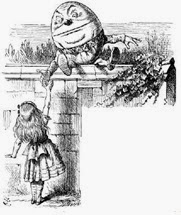
Humpty Dumpty


Humpty Dumpty sat on a wall,
Humpty Dumpty had a great fall;
All the king's horses and all the king's men
Couldn't put Humpty together again.


Hickory dickory dock!
The mouse ran up the clock;
The clock struck one,
The mouse ran down,
Hickory, Dickory, Dock!


Little Miss Muffet
Little Miss Muffet, Sat on a tuffet,
Eating her curds and whey;
Along came a spider,
Who sat down beside her,
And frightened Miss Muffet away.


Round and round the garden
Round and round the garden,
Like a teddy bear;
One step, two step,

                             Tickle you under there!

Reading Film: The Monk and the Fish


DEVELOPING LITERACY SKILLS IN THE PRIMARY CLASS. SAMPLE LESSON

START BY LISTENING
They start the class with a listening activity before see the film. She asked questions to make predictions on what the story is about only listening to the music. What the sounds can mean, if the music remind them a particular part of the day, and clues in the film soundtrack about the setting and the period. Is remarkable how much children can learn about the film with the soundtrack, without see any music.
Music definitely supports in terms of didactic the work about a new story. They can develop literacy skills as deduction. Also this creates interest in the children to check if their predictions are correct when they see the film. This kind of activities is more and easier for the children when they pass to the next years

SCULPTOR AND SCULPTED
The class is developing ideas about the monk character using this drama technique. They can understand better how he is feeling and why he is acting the way he is was. That gives them a practical experience before star the writing activities and the reading task.
After that they produce some sentences about what they are seeing and they can focus in some individual targets as capital letters.

SPOT THE SOTS
They teacher support the children with the specific vocabulary that they need for this activity. A kid is going to film the other doing a shot. They make them active.
They see the film again with a more critical point of view. (How is the camera now?)That can give them an idea of think about why they are using a long shot, or different shots types...

SHOT BY SHOT
In groups the children analyze shots of the Monk and the fish, describing the shot and thinking about how dialogue can be in that specific shot.
Is a story, a poem?

MAKING PREDICTIONS ABOUT THE END OF THE STORY
This story is perfect to make the children think what they think that happens in the end. They can imagine a lot of stories and make them creative. 

Kensuke's Kingdom Book Year 6 Activities III

10 THINGS TO SURVIVE A DESERTED ISLAND


Kensuke's Kingdom Book Year 6 Activities II

Chapter 8: The Night of the Turtles


Kensuke's Kingdom Book Year 6 Activities

Based on the book Kensuke we can immerse our students in motivating them with lots of activities:

-Click here to view the entire document

Michael Morpurgo often writes about animals in his books. In Kensuke’s Kingdom, Kensuke has made friends with the orang-utans. Read the following extract again:
“A shadow under the trees moved and came lumbering out into the sunlight towards us. A monkey, a giant monkey. Not a gibbon at all. It moved slowly on all fours, and was brown, ginger-brown. An orang-utan, I was sure of it. He sat down just a few feet from me and considered me. I dared not move. When he’d seen enough, he scratched his neck casually, turned and made his way on all fours slowly back into the forest. (p.66)”
 Re-write the story of Kensuke’s Kingdom from Tomodachi’s point of view.
This is your chance to use as many adjectives as possible.
Here are some things to think about including in your writing:
• Describe their initial reaction to having a stranger and a dog on the island
• Describe what Michael and Stella looked like
• Describe how Stella and Michael arrived
• Describe how this would have made you feel. Did it remind you of anything?
• Describe how the relationship between Michael and Kensuke changes over time.
• Describe Michael and Stella’s departure and the effect it had on Kensuke.